

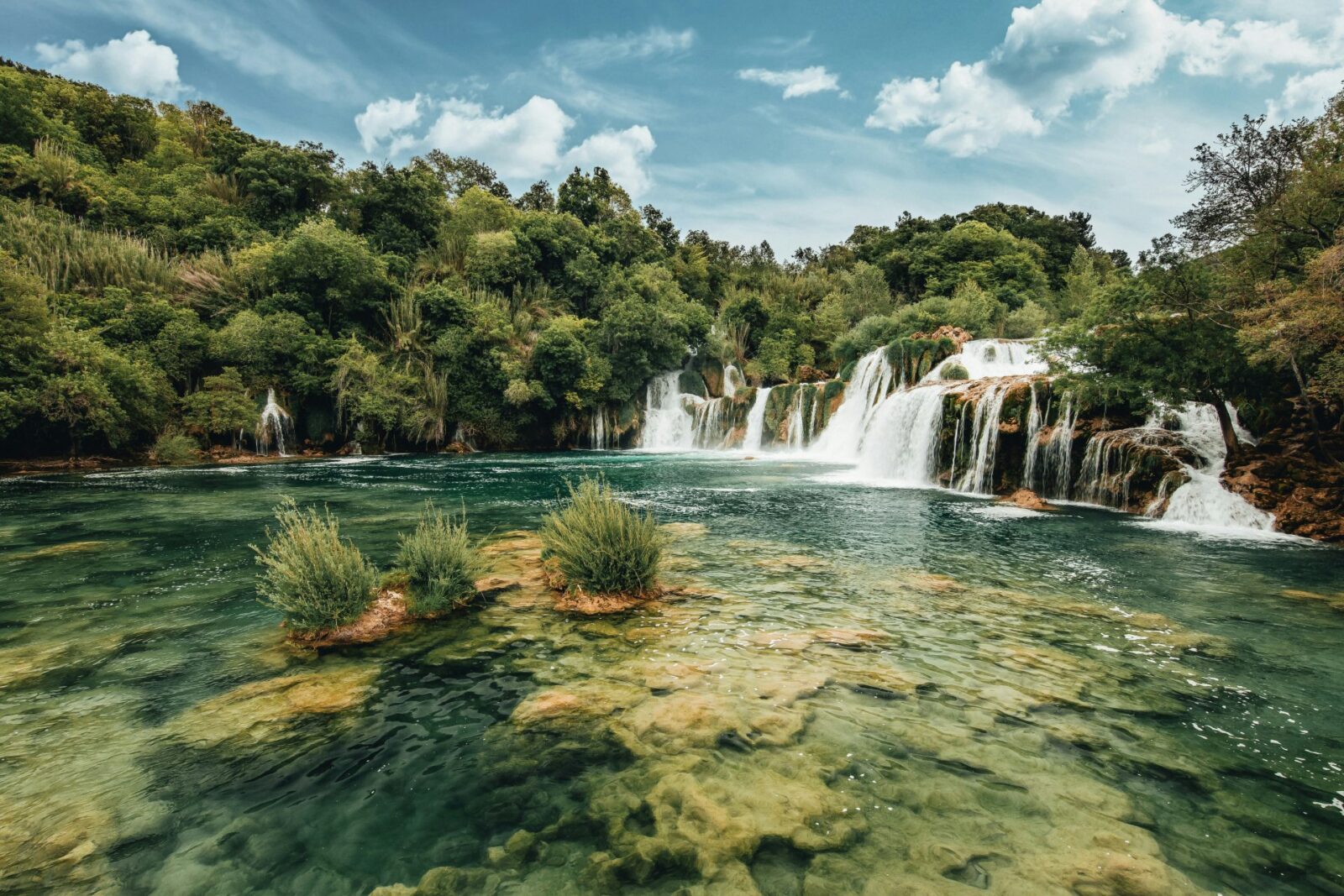
Cycling through Croatia’s national parks offers a completely different experience compared to coastal or island routes. Instead of open sea views and Mediterranean towns, riders are surrounded by dense forests, rivers, waterfalls, and dramatic limestone landscapes. The combination of protected nature and well-connected regional roads makes national parks a powerful addition to any cycling itinerary in Croatia.
While some parks have restricted cycling zones inside core protected areas, the surrounding regions and designated cycling routes provide excellent access points. This allows cyclists to experience the natural beauty of Croatia’s most famous parks without compromising conservation rules.
Krka National Park: waterfalls and river valleys
Krka National Park is one of the most accessible and cycling-friendly natural areas in Croatia. Located near Šibenik, it is defined by the Krka River, cascading waterfalls, and a network of viewpoints and smaller settlements around the park perimeter.
Cycling routes in the Krka region typically follow quiet inland roads through karst landscapes, vineyards, and rural villages. The terrain is moderately hilly, making it suitable for both leisure cyclists and more experienced riders. One of the highlights is the approach toward Skradinski Buk, the park’s most famous waterfall area, which can be combined with scenic river valley rides.
Plitvice Lakes: cycling in a UNESCO landscape
Plitvice Lakes National Park is Croatia’s most famous natural attraction and a UNESCO World Heritage Site. While cycling is not allowed inside the core lake system, the surrounding Lika region offers exceptional cycling terrain.
Riders experience quiet mountain roads, dense forest sections, and rolling highland landscapes. The area is significantly cooler than the coast, especially in summer, which makes it a popular escape for longer rides. Cycling routes around Plitvice often include panoramic viewpoints and rural settlements that reflect traditional inland Croatian life.
Paklenica National Park: mountains and Velebit views
Paklenica National Park, located on the southern slopes of the Velebit mountain range, offers the most dramatic elevation changes among Croatia’s national park regions. It is especially popular among cyclists who enjoy challenging climbs and mountainous terrain.
The area is characterized by steep limestone cliffs, deep canyons, and rugged inland roads. While the park itself is primarily known for hiking and climbing, the surrounding cycling routes provide access to spectacular viewpoints and coastal-mountain transitions near the Adriatic.
Combining nature and cycling routes
One of the strengths of cycling in Croatia is the proximity of national parks to coastal and urban areas. Krka can easily be combined with Dalmatian coastal routes, while Plitvice serves as a natural inland extension of central Croatia cycling itineraries. Paklenica connects mountain terrain with coastal descents, offering one of the most dynamic cycling transitions in the country.
This flexibility allows for multi-environment cycling tours where riders experience sea, rivers, forests, and mountains within a single journey.
Best conditions for cycling in national park regions
The best time to cycle in and around Croatian national parks is during spring and autumn. In these seasons, temperatures are mild, vegetation is at its peak, and tourist numbers are lower compared to summer months.
Summer cycling is still possible, especially in forested and inland areas such as Plitvice, where temperatures are generally cooler than the coast. Early morning rides are recommended for Krka and Paklenica during hotter periods.
Conclusion
Cycling through Croatia’s national park regions adds depth and contrast to coastal cycling routes. From waterfalls and river valleys in Krka, to forested highlands around Plitvice, and dramatic mountain terrain in Paklenica, these landscapes showcase the country’s natural diversity. When integrated into cycling holidays, national parks provide a powerful balance between physical activity and immersive nature experiences.
