

Island cycling in Croatia offers a completely different experience compared to mainland routes. Instead of continuous traffic corridors and long coastal highways, cyclists are rewarded with quieter roads, slower rhythms, and a stronger sense of isolation and authenticity. The Adriatic islands of Hvar, Brač, and Korčula are among the most popular cycling destinations, each offering a distinct landscape, elevation profile, and cultural identity.
What makes island cycling particularly appealing is the combination of compact geography and high scenic density. Within a single day, cyclists can pass through coastal bays, olive groves, vineyards, pine forests, and historic stone villages, often with uninterrupted sea views in nearly every direction.
Hvar: lavender fields and panoramic climbs
Hvar is one of the most famous Croatian islands, known for its vibrant mix of nature, history, and Mediterranean charm. For cyclists, Hvar presents a more demanding terrain due to its elevation changes, but the reward is exceptional scenery.
The inland routes are characterized by rolling climbs through lavender fields, dry stone landscapes, and small hilltop villages. From higher elevations, riders are treated to panoramic views of the Pakleni Islands and the open Adriatic Sea. The roads are generally quiet outside of peak tourist zones, making it an excellent choice for riders seeking both challenge and beauty.
Brač: balanced terrain and iconic coastal views
Brač is often considered one of the most versatile cycling islands in Croatia. It offers a balanced mix of moderate climbs, coastal flats, and inland routes that pass through olive groves and traditional villages.
One of the most recognizable landmarks on the island is Zlatni Rat beach near Bol, a natural phenomenon shaped by wind and currents. Cycling routes often include stops here, combining beach views with relaxed coastal riding. The island’s highest point, Vidova Gora, provides one of the most dramatic viewpoints in the Adriatic, overlooking surrounding islands and the mainland.
Korčula: medieval charm and forested routes
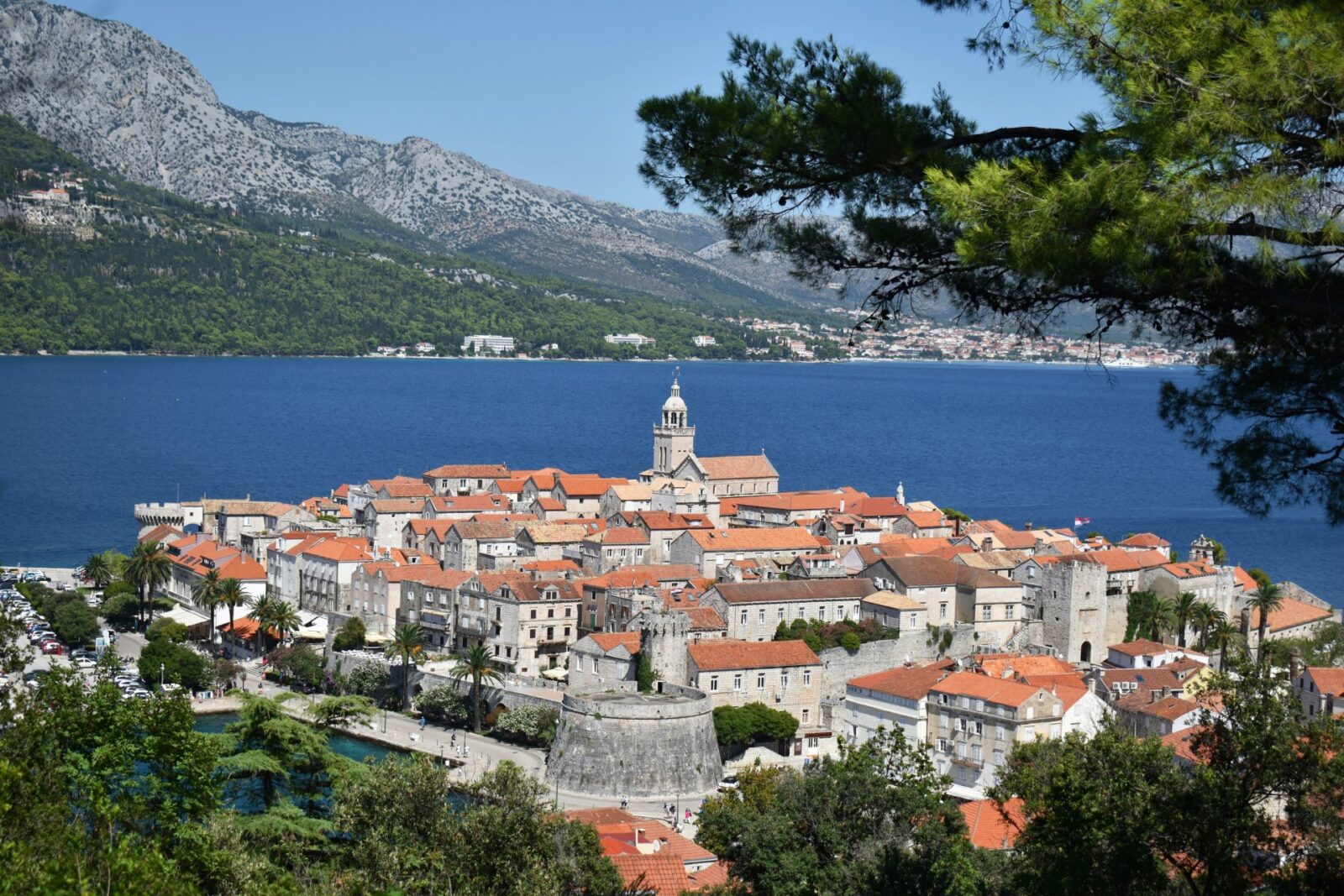
Korčula stands out for its dense greenery and strong historical identity. Often referred to as a “mini Dubrovnik,” the island’s old town features fortified walls, narrow streets, and Venetian architectural influence.
Cycling on Korčula is generally smoother and less physically demanding compared to Hvar. The island’s interior is covered in pine forests, vineyards, and small agricultural areas, creating shaded and comfortable riding conditions even during warmer months. Coastal routes offer calm sea views and access to quiet coves and beaches.
Island-hopping by ferry
One of the key advantages of cycling in Croatia is the well-developed ferry network that connects the mainland with major islands. This allows cyclists to combine multiple islands within a single itinerary, creating multi-day tours that feel dynamic and varied.
Ferry connections from Split, Makarska, and Dubrovnik make it possible to design flexible routes that include both mainland and island segments. This structure is particularly popular in guided cycling tours, where logistics are managed and cyclists can focus entirely on the riding experience.
Best time for island cycling
The ideal periods for island cycling are late spring and early autumn. During these seasons, temperatures are mild, vegetation is at its most vibrant, and traffic levels are lower compared to peak summer months. Summer cycling is still possible, but early morning rides are recommended due to heat exposure.
Conclusion
Cycling the Croatian islands of Hvar, Brač, and Korčula delivers a highly diverse and immersive experience. Each island offers its own balance of terrain, scenery, and cultural character, making island cycling one of the most distinctive ways to explore the Adriatic. Whether seeking challenging climbs, relaxed coastal rides, or quiet forested routes, the islands provide a complete cycling environment within a compact geographic area.
